
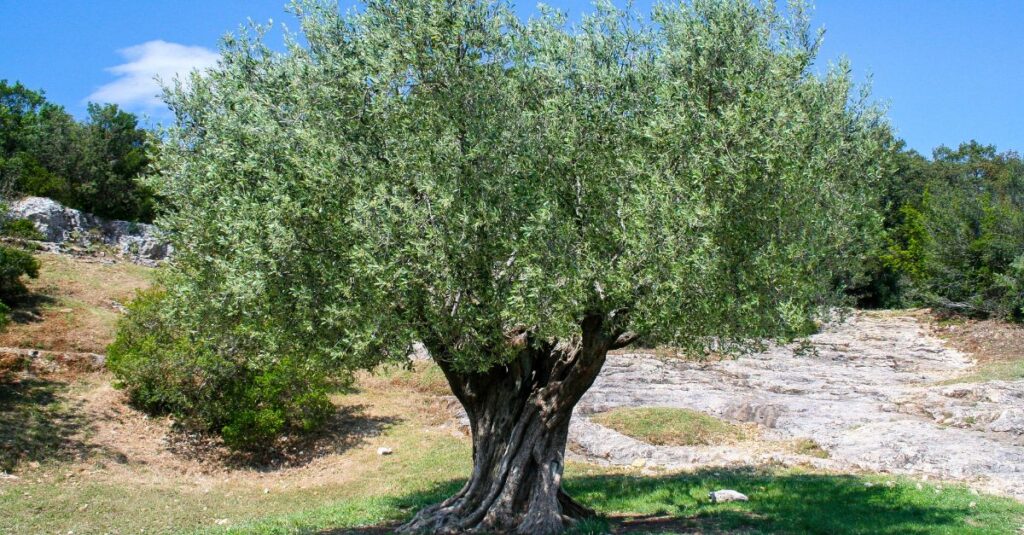
16 Now if the firstfruits are holy, so is the whole batch. And if the root is holy, so are the branches. 17 Now if some of the branches were broken off, and you, though a wild olive branch, were grafted in among them and have come to share in the rich root of the cultivated olive tree,…”
Verses 16-24 craft a beautiful illustration using gardening and arboriculture to display how Israel’s rejection of the gospel, and the salvation of the Gentiles by faith in Jesus, has brought the Gentiles into a covenant relationship with God. This idea first comes from the Old Testament:
“The Lord named you a flourishing olive tree, beautiful with well-formed fruit. He has set fire to it, and its branches are consumed with the sound of a mighty tumult.” — Jeremiah 11:16
Even the prophet Jeremiah prophesied that Israel’s unbelief and disobedience would result in the destruction of those unbelieving branches.
“Now if the firstfruits are holy, so is the whole batch.” (v. 16a) What is this idea of firstfruits? This language comes from the Old Testament, indicating the offerings Israel was to give to God when they ate the food or reaped the harvest of the promised land. God required that the first of their food, fruits, and harvests be offered to Him as an acknowledgement that He was the reason for their prosperity and as a symbol that everything they did was dedicated to God. When you dedicated the firstfruits to God, it was a way of saying that the whole batch, not just the firstfruits, is to be dedicated in service to God.
“The Lord instructed Moses, “Speak to the Israelites and tell them: After you enter the land where I am bringing you, you are to offer a contribution to the Lord when you eat from the food of the land. You are to offer a loaf from your first batch of dough as a contribution; offer it just like a contribution from the threshing floor. Throughout your generations, you are to give the Lord a contribution from the first batch of your dough.” — Numbers 15:17-21
“We will bring a loaf from our first batch of dough to the priests at the storerooms of the house of our God. We will also bring the firstfruits of our grain offerings, of every fruit tree, and of the new wine and fresh oil. A tenth of our land’s produce belongs to the Levites, for the Levites are to collect the one-tenth offering in all our agricultural towns.” — Nehemiah 10:37
“The best of all the firstfruits of every kind and contribution of every kind from all your gifts will belong to the priests. You are to give your first batch of dough to the priest so that a blessing may rest on your homes.” — Ezekiel 44:30
When Paul speaks of the firstfruits here in Romans, he is speaking of the Israelite patriarchs, who believed God to be true to His covenant and believed that He would provide a way of salvation for them and their offspring. In being the firstfruits, they dedicated not only their own lives to God, but also all of those who would follow from them. When the roots of the tree are dedicated to belief in the Messiah and are committed in service to God, so is everything that the tree produces. The entirety of Israel has been dedicated to serve the one and only true God. However, as we have been discussing in chapters 9-11, not all of Israel believed. In fact, a majority has not believed. Only the remnant of Israel, whom God has chosen, believes in the Messiah which God sent for them. Those Israelites who have not believed will be, or have been, cut off. They no longer share in the blessings and the promises God has afforded to Israel. Those native olive branches of unbelief have been cut off and removed. By God’s grace, through this tragedy of unbelief, God has chosen to graft in a wild olive branch in place of the branches which have been cut off. These are the Gentiles who have believed! God has grafted them into the tree, whose rich roots provide them with the blessings and promises given to Israel. What an amazing thing God has done, an amazing thing which has brought the gospel and blessings of God to the Gentiles! Paul, in his letter to the Ephesians, explains that this process happens at salvation.
“At that time you were without Christ, excluded from the citizenship of Israel, and foreigners to the covenants of promise, without hope and without God in the world. But now in Christ Jesus, you who were far away have been brought near by the blood of Christ.” — Ephesians 2:12-13 (See also 2:14-22)
Jesus hints at this process as well:
“But I have other sheep that are not from this sheep pen; I must bring them also, and they will listen to my voice. Then there will be one flock, one shepherd.” — John 10:16
It is not the Gentile’s being brought into this covenant relationship that saves them from their sin. Rather it is through their confession that Jesus is Lord and their belief in His resurrection. The Gentile nations have been brought into a covenant relationship with God, the covenant that God made with Israel’s patriarchs (the firstfruits), as a result of the blood of Christ shed on their behalf. Not all Gentiles enjoy this covenant, only those who have been saved by faith in Jesus, only those whom God has elected.
And so, it is through Israel’s rejection of the gospel of faith, their rejection of the Messiah, Jesus, and through the saving faith of the Gentiles, that the Gentiles have been grafted into the covenant relationship between God and Israel. What an amazing story and immaculate plan God is orchestrating!